Tag Archives: thealexshowtv

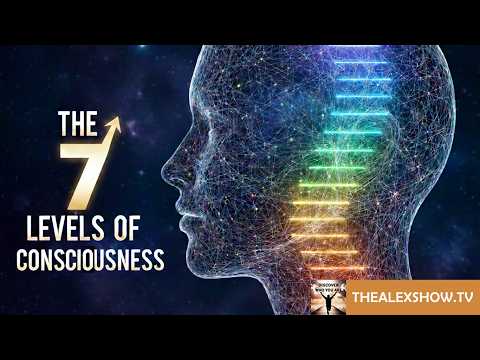
The 7 Levels of Consciousness – Guest Tony from London

The 7 Levels of Consciousness: A Deep Dive into Spiritual Awakening and Human Evolution

In this profound episode of TheAlexShow.TV, host Alex welcomes Tony from London to explore one of the most transformative topics in modern spirituality: the seven levels of consciousness. This conversation goes beyond surface-level spirituality and into the mechanics of how human awareness evolves — from survival-based thinking to complete unity with source consciousness.

If you haven’t yet watched the full discussion, you can experience it here: The 7 Levels of Consciousness – Guest Tony from London. The insights shared in this episode challenge conditioning, question societal structures, and invite you to reflect deeply on who you truly are.

Why Consciousness Is the Foundation of Reality

One of the central themes discussed by Alex and Tony is that consciousness is not something we possess — it is what we are. Everything we experience — thoughts, emotions, perceptions, identity — appears within consciousness. Without it, there would be no experience of reality at all.

Yet most people never question their level of awareness. Instead, they operate within patterns shaped by fear, validation, social conditioning, and external authority. The seven levels of consciousness provide a map — not a rigid system — but a guide to understanding how awareness can expand.

Level 1: Survival Consciousness

The first level is survival consciousness. At this stage, awareness is primarily focused on safety, food, money, health, and physical stability. This level is essential. Without survival, nothing else matters.

However, modern society often keeps individuals locked into chronic survival anxiety. Bills, economic pressure, debt, inflation, and constant uncertainty create a persistent fear response. When someone is trapped in survival mode, creativity and spiritual exploration are pushed aside.

As discussed on TheAlexShow.TV, the issue is not survival itself — it is identification with fear. Survival consciousness becomes limiting when it dominates every thought and decision.

You can meet your responsibilities while cultivating awareness beyond fear. Survival does not have to define your identity.

Level 2: Ego Consciousness

The second level centers around ego and personal validation. Here, identity becomes tied to comparison and external approval. Social media, status symbols, material success, and recognition feed this level of consciousness.

In today’s digital world, ego consciousness is amplified through likes, comments, followers, and public perception. The constant question becomes: “How am I being seen?”

But as Alex emphasizes in this powerful episode, external validation is temporary. It can never create lasting fulfillment because it depends on forces outside your control.

When awareness expands beyond ego, you begin to realize that your value is intrinsic. You are not your achievements. You are not your reputation. You are not your digital presence.

Level 3: Tribal or Group Consciousness

The third level expands ego into collective identity. Instead of “I am right,” it becomes “We are right.” This is where political, religious, cultural, and ideological divisions take root.

Tribal consciousness offers belonging. It creates a sense of unity within a group. But it often does so by creating opposition. Division becomes necessary for identity to survive.

This level is heavily stimulated in modern media. Conflict generates engagement. Outrage creates clicks. Polarization keeps attention fixed.

Tony and Alex discuss how easy it is to become emotionally invested in defending a position without questioning its deeper origin. At this stage, people react rather than reflect.

Awareness begins to shift when you can observe your own reactions without immediately identifying with them.

Level 4: Self-Awareness and Awakening

The fourth level marks a turning point. This is where true awakening begins. You start recognizing the patterns that previously controlled you. You see how fear influences decisions. You notice how ego seeks validation. You observe how group identity shapes belief.

This is not about rejecting society or responsibilities. It is about becoming conscious of your internal processes.

Self-awareness brings a powerful question: Who am I beyond conditioning?

As Alex often reminds viewers on TheAlexShow.TV YouTube channel, the journey inward is the most important journey you will ever take.

Level 5: Witness Consciousness

At level five, awareness deepens significantly. You begin to experience yourself as the observer of thoughts rather than the thinker. Emotions arise, but you no longer become fully consumed by them.

Instead of saying “I am angry,” you begin to notice “Anger is present.” That subtle shift changes the relationship you have with experience.

This is where inner freedom begins. Thoughts lose their absolute authority. Emotional waves pass more quickly. Identity becomes less rigid.

You realize that the body and mind are instruments through which consciousness experiences reality. They are not the totality of who you are.

Level 6: Unity Consciousness

Unity consciousness dissolves the illusion of separation. At this level, compassion arises naturally because you recognize that others are not fundamentally separate from you.

This does not mean losing individuality. It means understanding interconnectedness.

Judgment softens. Competition decreases. The need to dominate fades. Instead, cooperation and empathy become natural expressions of awareness.

Alex and Tony explore how unity consciousness changes the way we approach conflict, relationships, and even global issues. When separation weakens, solutions become more creative and less reactive.

Level 7: Source Consciousness

The seventh level is source consciousness. This is the recognition that consciousness itself is universal. Individual awareness is not isolated — it is an expression of a greater field of intelligence.

At this stage, fear loses its grip. Validation is irrelevant. Division feels illogical. Life becomes an unfolding experience rather than a battlefield.

You begin to see that what you truly are cannot be threatened. The body may change. Circumstances may shift. But awareness remains constant.

This realization brings deep peace — not as a temporary emotion, but as a stable recognition of truth.

How Society Keeps Awareness Limited

Throughout the episode, an important theme emerges: modern systems stimulate the lower levels of consciousness continuously.

  • News cycles activate survival fear.
  • Advertising stimulates ego comparison.
  • Political narratives fuel tribal division.

This does not require conspiracy. It is simply how attention economics operates. Fear and outrage generate engagement.

But as viewers of The 7 Levels of Consciousness quickly realize, awareness is always available. You are not forced to remain at any level.

Practical Steps to Expand Your Consciousness

The journey toward higher awareness does not require isolation or extreme lifestyle changes. It begins with observation.

Here are practical starting points:

  • Spend five minutes daily in silent reflection.
  • Notice emotional reactions before acting on them.
  • Question deeply held beliefs without defensiveness.
  • Reduce exposure to fear-driven content.
  • Practice compassion even in disagreement.

Small shifts create profound transformation over time.

Integration: Moving Between Levels

It is important to understand that these levels are not permanent categories. You may experience unity consciousness one moment and survival anxiety the next. The difference lies in awareness.

When you recognize the level you are operating from, you are already stepping beyond it.

The purpose is not perfection. It is consciousness of consciousness itself.

Final Thoughts from Alex

At the heart of this conversation is a simple but powerful message: you are far more than conditioning. You are not defined by fear, ego, or division. You are an expression of awareness exploring experience.

As shared throughout this episode on TheAlexShow.TV, discovering your true nature changes everything. It shifts how you see conflict, success, identity, and even life and death.

If this conversation resonates with you, watch the full episode here: The 7 Levels of Consciousness – Guest Tony from London, and explore more transformative discussions on awakening, spirituality, and higher consciousness at TheAlexShow.TV YouTube Channel.

The journey is inward. Awareness is the path. Consciousness is what you are.

Don’t React

Don’t React: Choosing Peace Over Programming

In this reflective and deeply practical episode of TheAlexShow.TV, Alex explores one of the most misunderstood yet transformative principles of inner freedom: don’t react. At first glance, this idea can sound passive, weak, or even irresponsible. But as Alex explains, not reacting has nothing to do with avoidance, suppression, or indifference. It is about reclaiming sovereignty over your inner state.

Reaction, as described in this conversation, is not strength. It is conditioning. It is the automatic response of the mind and body when they feel threatened, judged, or challenged. Learning not to react is not about giving up; it is about choosing peace consciously.

Why Reaction Feels So Automatic

From a very young age, most people are conditioned to believe that reaction is necessary. Someone raises their voice, you raise yours. Someone insults you, you defend yourself. Someone hurts you, you hurt them back. This pattern is so normalized that questioning it can feel unnatural.

Alex describes this world as a constant stream of stimuli designed to provoke reactions. News, social media, politics, family dynamics, and even relationships often operate by pulling emotional triggers. The moment you react, you disconnect from your true self and fall back into automatic behavior.

Reaction, in this sense, is not conscious choice. It is programming.

Reaction Comes From the Ego

Throughout the episode, Alex makes a clear distinction between reaction and intention. Reaction originates in the egoic mind, whose primary functions are survival, defense, and validation. When the ego feels attacked, it reacts without asking permission.

Fear, rage, envy, pride, and the need to be right all live in this reactive space. These emotions are not evil, but they are not your essence. They arise when identity is threatened.

Alex emphasizes that your reactions belong to you. No one else controls them. And because they are yours, you are not obligated to follow them.

Not Reacting Is Not Passivity

A common misunderstanding is that not reacting means allowing injustice, abuse, or mistreatment. Alex is very clear: not reacting does not mean staying in harmful situations.

You can leave a toxic job.
You can end a harmful relationship.
You can walk away from abusive environments.

What changes is how you do it.

Instead of acting from rage or vengeance, you act from clarity. Instead of exploding emotionally, you make deliberate decisions that restore harmony.

Choosing Peace Is an Act of Strength

Alex shares personal stories and observations that illustrate this point. People who choose peace are often misunderstood as weak, but the opposite is true. Remaining calm in a reactive world requires immense inner stability.

Peace is not something you find outside. It is your natural state when you stop feeding the noise.

As highlighted in the support material referenced in the episode, peace does not depend on external circumstances. Reaction hides peace. Silence reveals it.

Reaction Versus Intuition

One of the most important distinctions in this episode is between reaction and intuition. Reaction is loud, urgent, and emotional. Intuition is quiet, subtle, and grounded.

When you react, you are listening to the mind.
When you do not react, you create space to hear the heart.

Alex explains that intuition does not demand immediate action. It waits. It observes. It responds only when necessary.

Violence and Justification

In a particularly honest segment, Alex discusses conversations with people who believe violence is justified because of past trauma or repeated exposure. Rather than condemning them, he acknowledges their experience.

If violence feels like the right reaction for someone at a certain stage, that is their path. But Alex also points out an important pattern: violence always leaves an aftertaste. Even when justified, it creates an energetic hangover.

Peace, by contrast, leaves no residue.

The World Feeds on Reaction

Much of modern society thrives on emotional engagement. Outrage drives clicks. Fear drives compliance. Conflict drives attention.

Alex suggests that one of the most powerful ways to disengage from unhealthy systems is simply not to react. When you stop feeding them energy, they lose influence over you.

Not reacting is not ignoring reality; it is refusing to be consumed by it.

Relationships and Emotional Freedom

In relationships, reaction is often mistaken for passion. Arguments, jealousy, and emotional volatility are normalized as signs of love. Alex challenges this idea.

If a relationship constantly triggers reactions, it may not be aligned. Staying out of fear of loneliness often causes more suffering than being alone.

Choosing peace sometimes means choosing solitude. And that choice is not a failure.

Letting Go of Old Wounds

Alex also addresses long-held resentment, especially toward family members. Reliving past pain repeatedly is a form of reaction. It keeps the wound alive.

Letting go does not mean approving what happened. It means refusing to let it define your present.

Wishing others well — even from a distance — is not weakness. It is liberation.

Work, Money, and Harmony

Another practical aspect of not reacting is how it applies to work and daily life. Many people wake up already reacting to their jobs, their routines, and their responsibilities.

Alex suggests that harmony matters more than status or income. Choosing a path that aligns with peace may require difficult changes, but the reward is inner stability.

Money can be earned in many ways. Peace cannot be bought.

Not Reacting Is a Daily Practice

Alex is clear that not reacting is not easy. It is simple, but not easy. It requires awareness, patience, and consistent self-observation.

You will still feel emotions. You will still notice impulses. The difference is that you no longer obey them automatically.

Each moment of non-reaction strengthens your inner center.

The Natural State of Being

At its core, this episode reminds us that peace is not something to achieve. It is something to remember.

When you stop reacting, you return to your natural state. From that place, decisions are clearer, relationships are healthier, and life becomes lighter.

Final Reflection

Don’t react does not mean don’t care.

It means don’t surrender your inner peace to external chaos.

Not reacting is choosing love over fear, clarity over impulse, and harmony over conflict.

For more conversations on conscious living, inner peace, and self-discovery, visit TheAlexShow.TV and continue the journey with Alex.

You can’t pretend anymore – Waking up hurts

You Can’t Pretend Anymore – Waking Up Hurts

In this deeply honest and transformative episode of TheAlexShow.TV, Alex explores a phase of awakening that is rarely discussed with clarity and compassion: the moment when pretending becomes impossible. The title, You Can’t Pretend Anymore – Waking Up Hurts, may sound harsh at first glance, but the message behind it is neither pessimistic nor discouraging. It is an invitation to understand what is actually happening when reality begins to feel uncomfortable in ways it never did before.

This discomfort is not physical pain, nor is it suffering in the traditional sense. Alex reframes the word “hurts” as transformation. What hurts is not awakening itself, but the friction between who you have been conditioned to be and who you are beginning to remember yourself as.

Why Awakening Feels Uncomfortable

Awakening is often romanticized as a moment of bliss, clarity, and peace. While those elements do emerge, they are rarely the first stages. The initial phase is disorienting. Old structures that once provided certainty begin to collapse, and familiar narratives no longer feel authentic.

According to Alex, this discomfort arises because awakening forces a shift in perception. You start seeing reality differently, and once that shift happens, there is no going back. You may find yourself wishing, even briefly, that you had never started this process at all.

This reaction is natural. It does not mean something has gone wrong. It means something is changing.

You Are Not Broken

A central message of this episode is reassurance. Feeling disconnected, out of place, or unable to engage in old patterns does not mean you are broken. It means you are waking up.

Alex references the work of Carl Jung, particularly the concept of individuation. Jung observed that spiritual transformation rarely occurs through dramatic revelations. Instead, it unfolds quietly, through a gradual shedding of what no longer resonates.

You stop forcing conversations. You stop tolerating environments that drain you. You stop wearing masks that once felt necessary. Not because you decided to, but because your spirit simply cannot tolerate them anymore.

The End of Pretending

One of the most noticeable changes during awakening is the inability to pretend. Pretending to care about things that no longer matter. Pretending to agree just to maintain harmony. Pretending to fit into roles that feel increasingly artificial.

Alex emphasizes that this does not mean becoming isolated, arrogant, or dismissive of others. It means becoming honest with yourself.

The exhaustion many people feel is not caused by awakening itself, but by trying to remain someone they are no longer aligned with.

A Shift in Identity

As this process unfolds, identity begins to loosen. You may no longer define yourself through labels such as political affiliation, belief systems, or even spiritual identities. Alex is careful to avoid labeling this process as “being spiritual,” because labels themselves can become another form of separation.

Everyone is spiritual by nature. Everyone is spirit experiencing reality through a soul and a body. Awakening does not make someone more spiritual than others. It simply reflects a different stage of experience.

This understanding removes hierarchy and judgment from the process.

Relationships During Awakening

One of the most challenging aspects of waking up is navigating relationships. Family gatherings, social events, and long-standing friendships may begin to feel strained—not because others have changed, but because you have.

Alex speaks candidly about this dynamic. Awakening does not mean cutting people off or withdrawing from life. In fact, total isolation is not the answer.

Instead, it requires a new way of relating. Less debate. Less need to be right. More listening. More compassion.

Family, Friends, and Attachment

Alex shares a personal reflection on how family and friends evolve over time. Biological family may become chosen family, and lifelong friends may become family through shared experience.

Deep bonds do not require constant interaction. Like a strong tree, once roots are established, less maintenance is needed. This applies to relationships during awakening as well.

You may interact less, but the connection remains. And when interactions do happen, they are often more authentic.

Letting Go of Being Right

One of the earliest shifts during awakening is the loss of interest in being right. Arguments lose their appeal. Validation from others becomes unnecessary.

Alex explains that many people are deeply programmed to seek validation. They need agreement to feel secure. When you stop participating in that dynamic, it can create friction.

But over time, a quiet respect often emerges. Others sense that they will not get validation or resistance from you, and the interaction softens.

Politics, Religion, and Silence

Family gatherings often revolve around sensitive topics such as politics, religion, and social issues. During awakening, engaging in these discussions can feel increasingly uncomfortable.

Alex suggests that silence is not avoidance. It is discernment.

You are not required to have an opinion on everything. Choosing not to engage is not weakness; it is clarity.

When asked directly, it is perfectly valid to say, “I don’t have an opinion,” or “I’d rather not discuss that.”

Trusting the Inner Process

A recurring theme throughout this episode is trust. Trusting the process. Trusting intuition. Trusting that not having answers is part of the journey.

Awakening does not provide immediate clarity. It removes false certainty first.

Alex emphasizes that this process is individual. There are no timelines. No dates. No collective deadlines. Free will makes prediction impossible.

Each person wakes up in their own way, at their own pace.

The Myth of Collective Ascension

Alex addresses a common narrative in modern spiritual culture: the idea that humanity is collectively ascending on a fixed timeline.

While collective change is possible, it can only occur when individuals choose to behave differently. Awakening cannot be imposed, predicted, or scheduled.

Any belief that places some people above others is rooted in ego, not awareness.

Living in This World While Waking Up

Awakening does not remove you from this world. You are still here to live, work, love, and connect.

The difference is how you participate.

You may still attend gatherings. You may still engage socially. But you do so without pretending. Without forcing. Without betraying yourself.

This balance is subtle and requires patience.

Why It Feels Like Loss

Many people interpret awakening as loss. Loss of interest. Loss of connection. Loss of motivation.

Alex reframes this entirely. What feels like loss is actually release. You are not losing yourself; you are losing what you were never meant to carry.

Old emotions such as hate, rage, envy, pride, and judgment begin to fall away—not because you suppress them, but because they no longer serve a purpose.

Compassion for Others

A crucial reminder in this episode is compassion. Awakening does not make you superior. It makes you more understanding.

Others are not wrong because they are at a different stage. Everyone has a process. No one is ahead or behind.

Judgment dissolves naturally when identity loosens.

Discovering Your True Self

The episode closes with a familiar but powerful invitation: discover who you truly are.

This discovery is personal. No one can do it for you.

Alex suggests dedicating a few minutes a day to asking simple questions: “Who am I?” “Where do I come from?” “What is my purpose?”

The answers will not arrive as explanations. They will arrive as shifts.

Freedom Beyond Pretending

When you stop pretending, freedom emerges. Not the freedom to escape life, but the freedom to live it authentically.

You stop competing. You stop complaining. You stop depending on external validation.

You begin to trust what you feel inside.

Final Reflection

Waking up hurts because it changes you. And change is uncomfortable when you try to remain the same.

You cannot unsee what you have seen. You cannot unknow what you have realized.

This is not a curse. It is growth.

You are not broken.

You are waking up.

For more reflections on awakening, self-discovery, and conscious living, visit TheAlexShow.TV and continue the journey with Alex.

You are not human – You are Creation

You Are Not Human – You Are Creation

In this profound episode of TheAlexShow.TV, Alex invites us to reconsider one of the most deeply ingrained assumptions of our existence: the belief that we are merely human. According to this perspective, being human is not an identity but an experience, a temporary role played by something far greater. The central message is both liberating and unsettling — you are not human, you are creation itself.

This idea is not presented as a metaphor meant to inspire motivation or self-esteem. Instead, it is offered as a literal reorientation of identity. Humanity, as Alex explains, is comparable to a character in a film. The character has a name, a story, struggles, relationships, and a limited arc. But the actor behind the character exists beyond that role. In the same way, what you truly are exists beyond the human experience.

The Actor and the Role

One of the most powerful analogies in this episode is the comparison between an actor and the roles they play. An actor may appear in dozens or even hundreds of films, portraying radically different characters. None of those characters define the actor’s true identity. They are expressions, not the source.

Being human is one such role. It is not insignificant, nor is it meaningless. But it is not the sum total of what you are. When someone says, “I am only human,” they are unknowingly limiting their identity to a single role while ignoring the vast spectrum of experiences that consciousness is capable of expressing.

According to Alex, this is why it becomes so difficult for many people to even consider past lives, let alone experiences beyond humanity. If one cannot acknowledge having been human before, how could one acknowledge having been something else entirely?

Creation Experiencing Itself

The episode builds on a recurring theme throughout the channel: creation experiencing itself through form. You are not a byproduct of the universe; you are the universe exploring itself from a specific point of view. The human experience is dense, immersive, and designed to feel real precisely because it requires focus.

This density comes with a cost: forgetting. Forgetting who you are, where you come from, and what you have experienced before. Alex explains that this forgetting is not accidental. It is part of the structure of this reality. To fully experience being human, consciousness temporarily narrows its awareness.

This narrowing does not destroy what you are. It only obscures it.

Reincarnation and Free Will

Alex briefly touches on reincarnation, clarifying an important distinction. The repetition of human experiences does not mean the experience is wrong or flawed. Watching the same movie more than once does not make the movie bad. The issue arises only when repetition occurs without awareness or free will.

The concern is not reincarnation itself, but the possibility of being influenced into repeating experiences without full understanding. Creation, by its nature, must operate through free will. Any system that interferes with that principle creates imbalance.

However, this episode does not dwell on that subject. Instead, it refocuses on identity — who you are beyond cycles, roles, and stories.

You Are More Than This Reality

According to Alex, one of the reasons this reality feels so consuming is because we collectively elect to focus on it. Attention is energy, and where attention goes, experience solidifies. By choosing to focus almost exclusively on the physical, we reinforce the illusion that this is all there is.

This does not mean the human experience should be rejected or diminished. On the contrary, Alex emphasizes that being human is valuable. It offers perspective, emotion, relationships, and growth. The problem arises only when the experience becomes an identity.

When you define yourself exclusively as human, you unconsciously reject every other aspect of your existence.

The Ego and the Mind

A significant portion of the episode addresses the role of the ego. The mind, Alex explains, operates through the ego. This does not make the ego evil or inherently negative. It simply means the ego has its own agenda: survival, validation, control, and certainty.

The ego cannot comprehend divine consciousness, intuition, or the higher self because those concepts exist beyond comparison and definition. The ego thrives on labels. Creation does not.

Trying to understand your true nature purely through intellectual effort often leads to frustration. The mind wants clear answers, timelines, and proof. Consciousness, however, communicates through intuition, feeling, and resonance.

Why the Truth Feels Cryptic

Alex explains that higher understanding does not arrive in neatly packaged explanations. It does not come as a book, a vision, or an external authority figure. In fact, anyone claiming to deliver absolute truth in a fully digested form should raise concern.

True insight arrives subtly. Through synchronicities. Through emotional resonance. Through questions that arise spontaneously rather than answers that are imposed.

This is why modern culture’s obsession with speed and simplification works against deeper understanding. Shorts, clips, and rapid consumption may entertain, but they rarely transform.

Asking the Right Questions

Rather than seeking answers, Alex encourages asking better questions. Spending even a few minutes a day asking the universe simple questions such as “Who am I?” or “Where do I come from?” opens space for awareness.

The responses will not arrive as direct explanations. They may come as shifts in perception, changes in priorities, or subtle realizations that unfold over time. This process cannot be rushed.

Patience is not a virtue here; it is a requirement.

Personal Experience and Forgetting

Alex shares that as a child, he experienced states of awareness that felt expansive and non-human. Over time, as the ego developed, those experiences faded. This, he explains, is not unique. It is part of growing into the human role.

The development of the ego stabilizes the experience of being human, but it also limits access to broader awareness. The challenge is not eliminating the ego, but understanding its function and not allowing it to dominate identity.

You will always have an ego in this experience. The key is how you relate to it.

Discovering the True Self

The episode culminates in a simple but profound invitation: discover who you truly are. Not intellectually, but experientially. This discovery is deeply personal. No teacher, system, or belief structure can do it for you.

Alex emphasizes that your limits are self-imposed. Fear, envy, rage, pride, judgment, and comparison are not inherent traits. They are byproducts of egoic identification.

As awareness expands, these emotions naturally lose relevance. They no longer serve a purpose and gradually dissolve.

Service and Compassion

One of the most important clarifications in this episode is that recognizing your true nature does not remove you from humanity. It deepens your connection to it.

As identification with ego softens, compassion increases. Service becomes natural rather than obligatory. Helping others is no longer about being right or superior, but about resonance and understanding.

Alex reminds listeners to be patient with others. Everyone has their own process. Awakening cannot be forced, and comparison only reinforces separation.

Enjoy the Human Experience

Finally, Alex stresses the importance of enjoying this life. Repair relationships when possible. Let go of pride. Appreciate loved ones. The human experience is temporary, but it is meaningful.

You are not here to escape humanity, but to experience it without forgetting who you are.

You are not human.

You are creation, exploring itself through a human form.

For more explorations into identity, consciousness, and the deeper nature of reality, visit TheAlexShow.TV and continue the journey with Alex.

You are the origin of everything

You Are the Origin of Everything: Consciousness, Creation, and the Illusion of Separation

The idea that you are the origin of everything challenges nearly every belief system humanity has built. In this episode of TheAlexShow.TV, Alex revisits one of the most fundamental truths explored since the very beginning of the channel: reality does not exist independently of consciousness. It is sustained, shaped, and experienced through it.

This message is not about ego, superiority, or personal power over others. In fact, Alex makes it clear that misunderstanding this truth is precisely what leads to imbalance, control, and suffering. To understand that you are the origin is not to elevate yourself above others, but to recognize that there is no “other” in the way we have been taught to perceive it.

You Are Not a Fragment of Creation

A recurring metaphor throughout this episode is both simple and profound: you are not a drop of water in the ocean—you are the entire ocean contained within a single drop. This perspective dissolves the idea that creation is something external or distant.

From this point of view, existence is not made of separate beings competing for space, resources, or meaning. Instead, it is a unified field experiencing itself through countless perspectives. Each individual life is a localized expression of the same totality.

This understanding aligns with what many ancient traditions referred to as the Law of One or the principle of oneness. Separation, according to Alex, is not real—it is experiential.

The Danger of Ego Misinterpretation

Alex is careful to address one of the most common distortions of this concept. When the ego hears “you are the origin of everything,” it may translate that message into domination, entitlement, or superiority.

This is where imbalance begins.

The ego interprets unity as hierarchy: if I am everything, then I must be above others. But this interpretation violates the very laws that allow creation to function harmoniously.

In this episode, Alex outlines three fundamental universal principles:

  • The law of non-interference
  • The law of balance
  • The law of free will

Breaking any of these leads to distortion. Breaking all three leads to collapse.

The Law of Non-Interference

Understanding yourself as the origin does not grant permission to manipulate others. On the contrary, it imposes responsibility. Non-interference means allowing others to experience their own path without imposing your will, beliefs, or desires upon them.

Alex emphasizes that free will ends the moment it interferes with someone else’s sovereignty. Any action rooted in control—even when justified as “help” or “justice”—creates imbalance.

This principle applies not only to actions, but to emotional and energetic interference as well.

The Law of Balance

The law of balance reminds us that no being is above or below another. All expressions of consciousness are equal in essence, regardless of their role, intelligence, or material circumstances.

From this perspective, wealth, status, intelligence, and power do not make one more valuable than another. They are merely conditions within the experience.

Balance is broken the moment comparison enters the equation.

The Law of Free Will

Free will exists within the boundaries of balance and non-interference. You are free to act, choose, and explore, but not to impose.

Alex explains that many systems of control exploit misunderstandings of free will by encouraging entitlement and moral justification. This creates endless conflict while appearing righteous.

True freedom is quiet. It does not need validation.

Reality Is Sustained by Attention

One of the most practical insights from You Are the Origin of Everything is the idea that nothing persists without energy, and energy follows attention.

Problems are not fixed objects. They are patterns repeatedly energized by thought, emotion, and reaction. Worry, rumination, and anticipation are not signs of responsibility—they are mechanisms that keep situations alive.

Alex offers everyday examples: replaying arguments, reliving regrets, anticipating lack. In each case, the external situation remains unchanged, but the internal energy feeding it intensifies.

Letting Energy Pass Through You

Rather than resisting or suppressing experience, Alex suggests allowing events to pass through awareness without attachment. This does not mean indifference or passivity. It means non-identification.

When emotions are allowed to move freely, they lose their grip. When they are resisted or justified, they solidify.

This principle applies equally to joy and suffering. Attachment to either creates dependency.

Manifestation Is Not Control

Another common misunderstanding addressed in this episode is manifestation. While consciousness does shape reality, this does not mean snapping fingers and demanding outcomes.

Manifestation operates through alignment, not force.

Alex explains that opening yourself to possibilities creates pathways, not guarantees. When resistance dissolves, intuition emerges. Opportunities arise not through effort, but through resonance.

This is why letting go often produces better results than constant striving.

The Density of This Reality

Alex acknowledges that this reality is dense by design. Physical needs, health, money, and responsibility create friction. These conditions are not failures—they are features of the experience.

Rather than denying these challenges, the key is not allowing them to define identity.

You are not your circumstances. You are the awareness experiencing them.

Harmony Over Resistance

Harmony does not mean perfection. It means coherence.

When actions, thoughts, and emotions align, life becomes less reactive and more fluid. Solutions emerge organically, often from unexpected directions.

Alex notes that intuition frequently guides change: altering habits, adjusting diet, shifting relationships, or opening to new opportunities—without force or obsession.

The Role of Emotion

In the final part of the episode, Alex addresses emotions such as rage, fear, envy, and violence. These emotions are often defended as justified or necessary, but the real question is simpler:

Do they work for you?

If an emotion fragments peace, clarity, and harmony, it does not serve, regardless of justification.

Letting go is not weakness. It is efficiency.

Discovering Your True Self

The episode closes with an invitation rather than a command. Discovering your true self is a personal process. No one can do it for you.

By spending even a few minutes in stillness—asking who you are beyond labels and stories—old structures begin to dissolve.

Competition fades. Comparison loses meaning. Identity softens.

Freedom emerges not as escape, but as recognition.

Final Reflection

You are the origin of everything not because you control reality, but because reality appears through you.

This understanding does not inflate the ego. It dissolves it.

And from that dissolution, harmony naturally follows.

For more explorations into consciousness, reality, and self-discovery, visit TheAlexShow.TV and continue the journey.