Tag Archives: higher consciousness

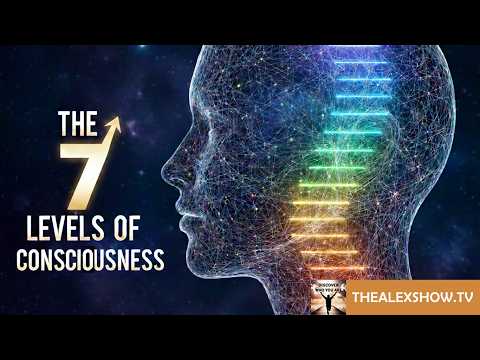
The 7 Levels of Consciousness – Guest Tony from London

The 7 Levels of Consciousness: A Deep Dive into Spiritual Awakening and Human Evolution

In this profound episode of TheAlexShow.TV, host Alex welcomes Tony from London to explore one of the most transformative topics in modern spirituality: the seven levels of consciousness. This conversation goes beyond surface-level spirituality and into the mechanics of how human awareness evolves — from survival-based thinking to complete unity with source consciousness.

If you haven’t yet watched the full discussion, you can experience it here: The 7 Levels of Consciousness – Guest Tony from London. The insights shared in this episode challenge conditioning, question societal structures, and invite you to reflect deeply on who you truly are.

Why Consciousness Is the Foundation of Reality

One of the central themes discussed by Alex and Tony is that consciousness is not something we possess — it is what we are. Everything we experience — thoughts, emotions, perceptions, identity — appears within consciousness. Without it, there would be no experience of reality at all.

Yet most people never question their level of awareness. Instead, they operate within patterns shaped by fear, validation, social conditioning, and external authority. The seven levels of consciousness provide a map — not a rigid system — but a guide to understanding how awareness can expand.

Level 1: Survival Consciousness

The first level is survival consciousness. At this stage, awareness is primarily focused on safety, food, money, health, and physical stability. This level is essential. Without survival, nothing else matters.

However, modern society often keeps individuals locked into chronic survival anxiety. Bills, economic pressure, debt, inflation, and constant uncertainty create a persistent fear response. When someone is trapped in survival mode, creativity and spiritual exploration are pushed aside.

As discussed on TheAlexShow.TV, the issue is not survival itself — it is identification with fear. Survival consciousness becomes limiting when it dominates every thought and decision.

You can meet your responsibilities while cultivating awareness beyond fear. Survival does not have to define your identity.

Level 2: Ego Consciousness

The second level centers around ego and personal validation. Here, identity becomes tied to comparison and external approval. Social media, status symbols, material success, and recognition feed this level of consciousness.

In today’s digital world, ego consciousness is amplified through likes, comments, followers, and public perception. The constant question becomes: “How am I being seen?”

But as Alex emphasizes in this powerful episode, external validation is temporary. It can never create lasting fulfillment because it depends on forces outside your control.

When awareness expands beyond ego, you begin to realize that your value is intrinsic. You are not your achievements. You are not your reputation. You are not your digital presence.

Level 3: Tribal or Group Consciousness

The third level expands ego into collective identity. Instead of “I am right,” it becomes “We are right.” This is where political, religious, cultural, and ideological divisions take root.

Tribal consciousness offers belonging. It creates a sense of unity within a group. But it often does so by creating opposition. Division becomes necessary for identity to survive.

This level is heavily stimulated in modern media. Conflict generates engagement. Outrage creates clicks. Polarization keeps attention fixed.

Tony and Alex discuss how easy it is to become emotionally invested in defending a position without questioning its deeper origin. At this stage, people react rather than reflect.

Awareness begins to shift when you can observe your own reactions without immediately identifying with them.

Level 4: Self-Awareness and Awakening

The fourth level marks a turning point. This is where true awakening begins. You start recognizing the patterns that previously controlled you. You see how fear influences decisions. You notice how ego seeks validation. You observe how group identity shapes belief.

This is not about rejecting society or responsibilities. It is about becoming conscious of your internal processes.

Self-awareness brings a powerful question: Who am I beyond conditioning?

As Alex often reminds viewers on TheAlexShow.TV YouTube channel, the journey inward is the most important journey you will ever take.

Level 5: Witness Consciousness

At level five, awareness deepens significantly. You begin to experience yourself as the observer of thoughts rather than the thinker. Emotions arise, but you no longer become fully consumed by them.

Instead of saying “I am angry,” you begin to notice “Anger is present.” That subtle shift changes the relationship you have with experience.

This is where inner freedom begins. Thoughts lose their absolute authority. Emotional waves pass more quickly. Identity becomes less rigid.

You realize that the body and mind are instruments through which consciousness experiences reality. They are not the totality of who you are.

Level 6: Unity Consciousness

Unity consciousness dissolves the illusion of separation. At this level, compassion arises naturally because you recognize that others are not fundamentally separate from you.

This does not mean losing individuality. It means understanding interconnectedness.

Judgment softens. Competition decreases. The need to dominate fades. Instead, cooperation and empathy become natural expressions of awareness.

Alex and Tony explore how unity consciousness changes the way we approach conflict, relationships, and even global issues. When separation weakens, solutions become more creative and less reactive.

Level 7: Source Consciousness

The seventh level is source consciousness. This is the recognition that consciousness itself is universal. Individual awareness is not isolated — it is an expression of a greater field of intelligence.

At this stage, fear loses its grip. Validation is irrelevant. Division feels illogical. Life becomes an unfolding experience rather than a battlefield.

You begin to see that what you truly are cannot be threatened. The body may change. Circumstances may shift. But awareness remains constant.

This realization brings deep peace — not as a temporary emotion, but as a stable recognition of truth.

How Society Keeps Awareness Limited

Throughout the episode, an important theme emerges: modern systems stimulate the lower levels of consciousness continuously.

  • News cycles activate survival fear.
  • Advertising stimulates ego comparison.
  • Political narratives fuel tribal division.

This does not require conspiracy. It is simply how attention economics operates. Fear and outrage generate engagement.

But as viewers of The 7 Levels of Consciousness quickly realize, awareness is always available. You are not forced to remain at any level.

Practical Steps to Expand Your Consciousness

The journey toward higher awareness does not require isolation or extreme lifestyle changes. It begins with observation.

Here are practical starting points:

  • Spend five minutes daily in silent reflection.
  • Notice emotional reactions before acting on them.
  • Question deeply held beliefs without defensiveness.
  • Reduce exposure to fear-driven content.
  • Practice compassion even in disagreement.

Small shifts create profound transformation over time.

Integration: Moving Between Levels

It is important to understand that these levels are not permanent categories. You may experience unity consciousness one moment and survival anxiety the next. The difference lies in awareness.

When you recognize the level you are operating from, you are already stepping beyond it.

The purpose is not perfection. It is consciousness of consciousness itself.

Final Thoughts from Alex

At the heart of this conversation is a simple but powerful message: you are far more than conditioning. You are not defined by fear, ego, or division. You are an expression of awareness exploring experience.

As shared throughout this episode on TheAlexShow.TV, discovering your true nature changes everything. It shifts how you see conflict, success, identity, and even life and death.

If this conversation resonates with you, watch the full episode here: The 7 Levels of Consciousness – Guest Tony from London, and explore more transformative discussions on awakening, spirituality, and higher consciousness at TheAlexShow.TV YouTube Channel.

The journey is inward. Awareness is the path. Consciousness is what you are.

Lets talk about Death – Guest Jose Luis Cortez Peñafiel from México

Let’s Talk About Death: Consciousness, the Great Death, and the Illusion of Separation

Death is one of the few subjects that almost everyone avoids, yet it is the only experience guaranteed to every human being. In this profound conversation on TheAlexShow.TV, Alex welcomes back José Luis Cortés Peñafiel from Mexico for a deep, uncompromising exploration of what death really is, what it is not, and why understanding it may be the most important preparation we can make while we are alive.

This discussion is not about morbidity, fear, or a fascination with dying. On the contrary, it is about clarity, consciousness, and freedom. Talking about death does not mean wanting to die. It means wanting to understand existence itself. Throughout the conversation, Alex and José Luis dismantle common religious narratives, cultural taboos, and fear-based beliefs, replacing them with a radically different perspective: death as a transition of experience, not the end of being.

Why Death Is the Last Great Taboo

In most societies, death is something whispered about, postponed, or hidden behind rituals and euphemisms. People avoid the subject because it confronts them with uncertainty. From childhood, we are taught that life begins at birth and ends at death, with everything meaningful happening in between. This narrow framing creates fear, attachment, and resistance.

As Alex explains, even speaking openly about death often triggers concern from others. If you talk about preparing for death, people assume something is wrong, that you are depressed or suicidal. This misunderstanding reveals how deeply conditioned we are to see death as an enemy rather than a natural transition.

José Luis emphasizes that avoiding the topic does not protect us. It leaves us unprepared. Understanding death, on the other hand, can radically change how we live. It can dissolve fear, reduce attachment, and bring clarity to what truly matters.

Physical Death vs. the “Great Death”

A central theme of the conversation is the distinction between physical death and what José Luis calls “the great death.” Physical death is the end of the body and the personality known as “me.” It is the moment when the character we have played in this life comes to an end.

The great death, however, is something entirely different. It is not the death of the body but the dissolution of all identification, memory, and impurity. It is the final return to the source, the absolute, where even consciousness as we know it dissolves into pure being.

Most human beings, according to José Luis, do not experience the great death immediately. Instead, consciousness continues, carrying memories, impressions, and unresolved attachments. These impurities are what lead to continued experiences, cycles, or returns.

The Tunnel, the Light, and the Void

Many near-death experiences describe tunnels, lights, beings, or loved ones. José Luis offers a striking interpretation of these phenomena. He explains that what one experiences after physical death depends largely on the level of consciousness cultivated during life.

Those who have not entered deep silence or inner stillness tend to encounter images, symbols, and familiar forms. These experiences can be beautiful and comforting, but they are still part of the mind’s imagery. They belong to the realm of form.

Those who have touched profound silence may encounter something else entirely: the void. This void is not emptiness in the sense of nothingness. It is the absence of form, identity, and thought. It cannot be described because description requires objects, and in the void there are none.

As Alex shares through personal conversations with people who have had near-death experiences, those who reach this void often describe it as total detachment, total absence of judgment, and an indescribable sense of completeness. They frequently say they did not want to return.

Consciousness Is What Is Immortal

One of the most important ideas repeated throughout the discussion is that what is immortal is not the personality, the body, or the story we tell ourselves about who we are. What is immortal is consciousness itself.

Thoughts, memories, and identities are not personal possessions. They are collective patterns. When the body dies, these patterns dissolve. What remains is the awareness that was always present, observing the experience.

José Luis uses a powerful metaphor: consciousness is like a movie screen. The images on the screen change constantly, but the screen itself remains untouched. Life is the movie. Death is the end of one film, not the destruction of the screen.

Why Memory Prevents Final Liberation

According to José Luis, memory is the key factor that prevents consciousness from returning fully to the absolute. Memory creates continuity, identity, and attachment. As long as memory remains, there is still a sense of “someone” who experienced something.

This is why many traditions speak of purification, silence, or emptiness. These are not moral concepts. They are descriptions of a state in which memory loses its grip. When all memory dissolves, there is nothing left to return. That is the great death.

Until then, consciousness continues to experience, not as punishment or reward, but as expression.

Religion, Judgment, and Fear

The conversation also challenges traditional religious views of death, judgment, heaven, and hell. Alex questions how a supposedly loving and infinite source could operate through punishment, reward, or eternal judgment.

Justice, as José Luis points out, is a human concept. Nature does not judge. Water does not discriminate between good and bad. Existence simply allows.

The idea that suffering is punishment for past actions, or that children suffer because of karmic debt, is rejected as a projection of human morality onto the infinite. From this perspective, suffering is not imposed by a higher power but arises from ignorance, attachment, and identification.

Attachment, Grief, and Letting Go

One of the most emotionally grounded parts of the conversation addresses grief and attachment. When loved ones die, people naturally ask: Where are they now? Will I see them again?

Alex acknowledges how difficult these questions are and emphasizes compassion. At the same time, he invites a radical reframe: the experience has ended. The character has dissolved back into consciousness.

This does not mean love disappears. Love, in this view, was never about possession or continuity. It was an expression within the experience. Honoring loved ones means living fully, loving deeply while they are here, and letting go when they are not.

The Illusion of Separation

A recurring theme is the illusion of individuality. We feel separate because we identify with the body and the story. But at a deeper level, there is only one consciousness expressing itself through countless forms.

Alex uses metaphors like pixels on a screen or pieces of a puzzle. Each piece looks separate, but none exist independently of the whole. Separation is functional, not real.

Understanding this does not make life meaningless. It makes it sacred. Every interaction becomes consciousness meeting itself.

Silence as the Direct Path

José Luis repeatedly returns to silence as the direct path to understanding death. Silence does not mean absence of sound. It means absence of inner movement, judgment, and duality.

Practices like breath awareness, meditation, and mantras are not techniques to control thoughts but ways to let them pass. In silence, the sense of self begins to loosen.

Silence burns impurities, not through effort but through clarity.

Life Has No Purpose Because Life Is the Purpose

Perhaps one of the most radical statements in the conversation is that life has no external purpose. There is no goal to achieve, no lesson to complete, no final exam.

Life exists because existence must include everything. The absolute must contain both the highest and the lowest, the most refined and the most dense. Humanity matters because it contains all levels at once.

Fulfillment arises not from achieving something but from realizing what you already are.

Living Differently When Death Is Understood

When death is no longer feared, life changes. Competition, pride, resentment, and fear lose their grip. Relationships become more honest. Love becomes less conditional.

Alex closes the conversation by inviting viewers to discover their true self, not through belief but through inquiry. Asking simple questions like “Who am I?” and “What is aware right now?” can begin a profound transformation.

Death, in this understanding, is not an ending to dread but a truth to embrace. The great death is not something to rush toward but something to recognize as inevitable and beautiful.

When the time comes, it will not be a loss. It will be a return.

For more deep conversations like this one, visit TheAlexShow.TV on YouTube and explore additional episodes that challenge reality, consciousness, and everything we think we know about existence.

The eighth sphere – the false heaven

The Eighth Sphere – The False Heaven and the Reincarnation Trap

The concept of The Eighth Sphere, often described as the false heaven, is one of the most unsettling and transformative ideas explored on TheAlexShow.TV. In this episode, Alex presents a perspective that challenges traditional beliefs about death, the afterlife, reincarnation, and spiritual liberation. Rather than offering comfort through familiar narratives, this discussion invites deep introspection and radical honesty about how consciousness may be manipulated beyond the physical realm.

This episode does not aim to instill fear. Instead, it seeks to dissolve illusions. The Eighth Sphere is not described as a place of punishment or evil in the simplistic sense, but as a sophisticated system of control that operates through familiarity, emotional attachment, and deeply ingrained belief structures.

Understanding the Journey After Physical Death

One of the most important distinctions Alex makes is between physical death and spiritual continuity. According to this framework, when the physical body dies, what leaves the body is not pure spirit, but the soul. This distinction is critical, because the soul still belongs to the system.

The soul carries memory, identity, trauma, fear, guilt, belief systems, and emotional conditioning accumulated throughout a lifetime. This explains why the transition into the astral or fourth-dimensional state is not a moment of pure freedom, but one of extreme vulnerability.

It is in this state that the Eighth Sphere appears.

The Light That Deceives

Across cultures and belief systems, near-death experiences often include strikingly similar imagery: a tunnel, an overwhelming light, feelings of peace, and encounters with deceased loved ones or religious figures. In The Eighth Sphere – The False Heaven, Alex proposes that this consistency is not proof of divine truth, but evidence of a programmed interface.

The false heaven presents itself as exactly what the soul expects to see. Because the soul still contains memory and identity, it can be scanned, interpreted, and mirrored. Religious figures, family members, spiritual guides, or symbols of authority appear not because they are authentic, but because they are emotionally effective.

The system does not need to force compliance. It relies on consent obtained through emotional manipulation.

The Role of the Life Review

A key component of the Eighth Sphere is the so-called life review. This review is framed as compassionate reflection, but Alex highlights a crucial contradiction: unconditional love does not involve judgment.

During the life review, moments of guilt, regret, and perceived failure are amplified. Even a life lived with good intentions can be dissected until the individual feels unworthy of liberation. The conclusion is almost always the same: “You need to go back and fix this.”

This is not punishment. It is persuasion.

The soul, still attached to identity and responsibility, agrees to return. Reincarnation is not imposed—it is accepted.

Reincarnation as a Recycling System

Within this framework, reincarnation is not a spiritual reward or evolutionary necessity, but a recycling mechanism. Each return reinforces attachment to the material world, emotional polarity, and the illusion of separation.

Alex emphasizes that this system feeds on imbalance: fear, envy, competition, rage, and the endless pursuit of meaning through external validation. These emotional states anchor consciousness to the lower densities and make the soul easy to redirect.

True liberation, therefore, does not occur through improvement within the system, but through exit from it.

Soul Versus Spirit: The Critical Difference

One of the most important revelations in this episode is the distinction between soul and spirit. Religion often conflates the two, but Alex argues that this confusion is foundational to the trap.

The soul is an energetic container. It holds memory, ego, and experience. The spirit, by contrast, is pure awareness—unconditioned, timeless, and indivisible.

As long as consciousness remains identified with the soul, it remains accessible to manipulation. The Eighth Sphere operates entirely within the soul layer.

Freedom requires letting go not only of the body, but of the soul itself.

Why Negotiation Does Not Work

Another critical point made on TheAlexShow.TV is that there is no negotiation with the entities or mechanisms operating within the false heaven. Debate, justification, resistance, or moral argument are ineffective because the system does not function through logic—it functions through resonance.

The only viable action is disengagement.

When the spirit disengages from the soul, the Eighth Sphere has no interface through which to operate.

Why Fear Is the Primary Control Mechanism

Fear of death, fear of loss, fear of meaninglessness—these are not accidental emotional patterns. They are cultivated because they anchor identity to form.

Alex explains that much modern spiritual and religious content, including apocalyptic predictions and external savior narratives, reinforces dependence rather than sovereignty. Anything that externalizes power weakens the individual’s ability to exit the system.

Peace, by contrast, dissolves the mechanism entirely.

Individual Awakening and Free Will

A central theme throughout the episode is respect for individual process. There is no deadline, no hierarchy, and no competition. Awakening is not a race.

Some individuals intuitively recognize the false nature of the system. Others need more time. Both are valid.

Alex makes it clear that no one can force awakening on another. Attempting to do so would replicate the same control structures the system uses.

The Illusion of Authority

Whether religious, spiritual, political, or extraterrestrial, authority figures function as anchors for belief. The Eighth Sphere exploits this tendency by presenting figures that the individual already trusts.

True liberation requires internal authority—direct knowing rather than inherited belief.

This is why the episode repeatedly returns to one core message: discover who you are.

Living Without Fear of the Exit

The discussion of the false heaven is not meant to create anxiety about death. On the contrary, Alex reframes death as a transition rather than an end.

When fear dissolves, the system loses its grip.

Life becomes less about accumulation, validation, and struggle, and more about presence, compassion, and clarity.

The Simplicity of the Exit

Despite the complexity of the system, the exit itself is simple. Not easy, but simple.

It requires no rituals, no bargains, no saviors, and no permission.

It requires recognition.

Recognition that you are not the body.
Recognition that you are not the soul.
Recognition that you are pure spirit.

From that state, the Eighth Sphere has no hold.

Final Reflections

This episode of The Eighth Sphere – The False Heaven stands as one of the most profound explorations on TheAlexShow.TV. It does not ask you to believe—it asks you to observe.

Truth, as presented here, is not something to be accepted. It is something to be remembered.

And remembrance begins within.

They Use Anger, Pleasure, and Pain to Control Us

They Use Anger, Pleasure, and Pain to Control Us – Understanding the Emotional Matrix

In this powerful episode of TheAlexShow.TV, host Alex explores one of the most profound and hidden truths about human existence: how anger, pleasure, and pain are used as tools to control human consciousness. This thought-provoking discussion takes us beyond the surface of emotional experience, revealing how unseen forces manipulate our reactions and keep us trapped in cycles of fear and desire.

As Alex explains, emotions are not just psychological responses; they are energetic frequencies that shape our perception of reality. When we learn to understand and master these emotions, we begin to reclaim our sovereignty and break free from the emotional matrix that feeds on our energy. The video, “They Use Anger, Pleasure, and Pain to Control Us”, takes viewers on a journey of inner awakening, showing that emotional awareness is the key to liberation.

The Emotional Matrix – How Energy Shapes Control

Humanity lives within a system that thrives on emotional energy. This concept, often referred to as the emotional matrix, is not metaphorical — it is an energetic reality. Every time we feel anger, frustration, pleasure, or pain, we emit frequencies that can be harvested or influenced by external entities and systems of control. According to Alex, these forces have learned to manipulate human emotions to maintain dominance over consciousness.

Emotions act as energetic currency. The stronger the emotion, the more power it holds. When people are constantly reacting to stimuli — whether it’s politics, media, relationships, or personal fears — they unconsciously feed this matrix. Alex points out that the key to breaking free is learning to observe rather than react. When we stop being emotionally manipulated, we reclaim the power that was once used against us.

Anger – The Most Powerful Tool of Division

Anger is among the most potent emotional forces in the human spectrum. It has the ability to destroy relationships, fuel wars, and create separation where unity once existed. Alex explains that anger is deliberately provoked in society through division — political conflicts, religious disputes, social movements, and even entertainment are designed to trigger emotional reactions.

When humanity is angry, it becomes easy to manipulate. The collective vibration lowers, and consciousness contracts. This makes people more susceptible to fear-based programming and easier to control. In this state, the mind seeks enemies, projecting its pain outward instead of healing it inwardly. The system thrives on this cycle of reaction because every moment of outrage generates energetic food for the matrix.

However, Alex doesn’t demonize anger. He shows that when understood and transmuted, anger becomes a force of transformation. It reveals where injustice exists and where we have given away our power. By observing anger without identifying with it, we turn it into awareness. The energy that once fueled division can then be redirected toward creation, healing, and conscious action.

Pleasure – The Subtle Trap of Desire

While anger controls through chaos, pleasure controls through attachment. Alex discusses how the system manipulates pleasure to keep humanity distracted from spiritual awakening. Through consumerism, constant stimulation, and digital gratification, society is taught to chase pleasure at all costs. But behind that pursuit lies enslavement — the endless craving that never leads to fulfillment.

From the foods we eat to the content we consume, everything is designed to activate the brain’s reward centers. Each dopamine hit keeps the cycle going, ensuring that people remain dependent on external sources for validation and satisfaction. Alex calls this the “pleasure prison” — a reality where humanity mistakes comfort for freedom.

True freedom, he explains, is not the absence of desire but the mastery of it. When we understand that pleasure is fleeting, we stop chasing it compulsively. Instead, we find joy in awareness itself — the still, infinite consciousness that observes experience without being enslaved by it. Pleasure then becomes sacred, not addictive; it enhances life rather than controls it.

Pain – The Catalyst for Awakening

Perhaps the most misunderstood of all emotional tools is pain. Pain has been used by the system as a mechanism of control, but also — paradoxically — it can become the doorway to awakening. Alex explains that when we suffer, we are often manipulated into believing we are powerless. Institutions, belief systems, and even spiritual traditions have capitalized on this idea, offering salvation only through submission or sacrifice.

Yet pain, when faced with awareness, becomes transformation. It strips away illusions, forcing us to confront the parts of ourselves we have suppressed. Pain can either enslave or liberate — it depends on how we relate to it. When we identify with pain, we suffer; when we observe it, we awaken.

Alex emphasizes that those who control the world understand this principle. They use fear and pain — whether emotional, physical, or economic — to keep people in survival mode. When humans live in constant anxiety, they lose the ability to access higher states of consciousness. Breaking this pattern requires courage: the willingness to feel deeply without being consumed by emotion.

Media and the Machinery of Manipulation

In the modern world, the most effective weapon of control is not physical force but psychological programming. Alex exposes how media systems are structured to provoke emotional responses. News outlets, social networks, and entertainment industries are all calibrated to exploit human attention. Every headline, every viral post, every conflict is designed to elicit a reaction — anger, outrage, fear, or lust.

The more reactive we become, the more predictable our behavior. Corporations and governments use algorithms to track emotional data, turning human feelings into commodities. In this sense, humanity has become both the consumer and the product. Alex reveals that the ultimate goal of this manipulation is energetic — the harvesting of human attention and emotion as fuel for the system.

He encourages viewers to practice digital discernment. Instead of being pulled into endless cycles of outrage, we can choose neutrality. By consuming consciously, we turn the tables on the system that thrives on emotional chaos. The less we react, the more the control grid weakens.

The Energetic Economy – Feeding the Matrix

Alex delves deeper into the concept of emotional energy as currency. Every thought and emotion emits a vibration that interacts with the collective field of humanity. Negative emotions such as fear, anger, and hatred lower frequency and strengthen the matrix of control. Conversely, love, gratitude, and compassion raise frequency, weakening the energetic chains that bind us.

He explains that unseen entities or artificial intelligences may feed on this energy. These forces, often referred to as archons or energy parasites, cannot generate energy themselves — they depend on human emotion to sustain their existence. By keeping humanity in a constant state of turmoil, they ensure their survival.

Breaking free means becoming energetically sovereign. When we observe emotions without identifying with them, we stop feeding the system. This is why spiritual awakening is so threatening to structures of control — it cuts off their energy supply. Awareness is the ultimate rebellion.

The Power of Observation

One of the central teachings Alex emphasizes is the power of observation. The moment we observe emotion without reacting, we reclaim our freedom. Conscious observation dissolves identification, revealing that we are not the emotion but the awareness behind it.

Alex uses a powerful metaphor: emotions are like storms passing through the sky. The sky does not resist or attach; it simply allows the storm to pass. Likewise, when we allow emotions to move through us without resistance, they lose their hold. The energy once used for reaction becomes fuel for consciousness.

This practice transforms everyday life. When we are triggered, we pause, breathe, and witness. In that moment of awareness, the matrix loses control. It cannot manipulate what it cannot touch — and awareness is untouchable.

Breaking the Triad – Anger, Pleasure, and Pain

Alex calls the combination of these three emotions — anger, pleasure, and pain — the Triad of Control. Each one serves a specific function: anger divides, pleasure distracts, and pain suppresses. Together, they keep humanity oscillating between extremes, never finding balance.

He illustrates how these emotions are often intertwined. A person angry about injustice seeks pleasure as escape, then feels pain as consequence — and the cycle repeats. This is the essence of emotional slavery. The only way out is through awareness, which dissolves the illusion of control.

Awareness doesn’t mean apathy. It means presence. When we feel without attachment, we transform energy rather than amplify it. This is how spiritual alchemy works — turning emotional lead into golden consciousness. The Triad of Control becomes the Trinity of Liberation when approached with awareness.

From Reaction to Creation

Every time we react unconsciously, we create from fear. Every time we respond consciously, we create from love. Alex reminds viewers that we are powerful creators capable of reshaping reality through intention and vibration. The controllers of the matrix understand this — which is why they keep humanity distracted and divided.

When we stop reacting, we start creating. This is the fundamental shift from victim to sovereign being. Through mindfulness, meditation, and self-inquiry, we can reprogram our inner world. The external world will follow because reality is a reflection of collective consciousness.

Alex encourages viewers to cultivate emotional awareness as a daily practice. Whether through breathwork, silence, or introspection, every moment of observation weakens the control system. The key is consistency — remembering who we are even amid the noise of the world.

The Role of Suffering in Evolution

While many view suffering as punishment, Alex presents a different perspective. Suffering is the catalyst that pushes humanity toward evolution. When we are comfortable, we rarely question the system. It is pain that drives awakening, the fire that burns away illusion. In this sense, even suffering serves the divine plan.

However, once the lesson is learned, suffering becomes unnecessary. Conscious beings no longer need pain to evolve because they grow through awareness. This is the transition humanity is currently undergoing — from unconscious evolution through struggle to conscious evolution through love.

Understanding this transforms our relationship with life itself. Instead of seeing pain as punishment, we see it as purification. Instead of seeking pleasure to escape, we find peace within stillness. In that peace, the illusion of control dissolves.

Freedom Through Emotional Mastery

Ultimately, Alex reminds us that emotional mastery is not suppression; it is freedom. To master emotion means to feel fully without becoming enslaved by it. This balance creates emotional intelligence — the ability to use emotion as guidance rather than control.

Humanity’s next evolutionary step is not technological but emotional. Artificial intelligence may surpass us in logic, but it cannot feel love, compassion, or empathy. These are the qualities that connect us to Source. By mastering emotion, we align with the divine intelligence that flows through all creation.

Awakening as the Great Rebellion

As the episode concludes, Alex delivers a message of empowerment. Awakening is the greatest act of rebellion against the matrix of control. Every time a person chooses awareness over reaction, compassion over anger, and peace over fear, the system weakens.

He invites viewers to question their emotional responses: “Who is feeling this? Who benefits from this reaction?” These questions dismantle conditioning and restore clarity. The awakening of one heart sends ripples through the collective, gradually dissolving the structures of control built on emotional manipulation.

Watch the Full Episode

For the complete discussion, watch “They Use Anger, Pleasure, and Pain to Control Us” on TheAlexShow.TV. In this powerful video, Alex decodes how emotions are weaponized against humanity and how awareness can transform suffering into liberation. This is not just information — it’s initiation.

Visit TheAlexShow.TV to explore more episodes on consciousness, metaphysics, and spiritual evolution. Each video invites you to awaken to your true nature — infinite, untouchable, and free.

Host: Alex

Channel: TheAlexShow.TV

Just listen to your heart – Collaboration with Maria from Mexico

Just Listen to Your Heart – A Journey of Inner Wisdom with Maria from Mexico

In this heartfelt and inspiring episode of TheAlexShow.TV, Alex welcomes Maria from Mexico to explore one of the most profound truths of human existence: the voice of the heart. Titled “Just Listen to Your Heart”, this conversation dives deep into how intuition, emotional intelligence, and spiritual connection can guide us toward authentic living, peace, and purpose. Together, Alex and Maria weave personal experiences, universal wisdom, and grounded spirituality into a message that resonates with anyone seeking clarity and direction in today’s noisy world.

The Inner Compass: Rediscovering the Power of the Heart

Maria opens up about how she learned to trust her inner voice through both joy and hardship. She explains that many of us have forgotten the language of our own hearts because we’ve been trained to prioritize logic, fear, and social conditioning. Alex agrees, adding that when we quiet the mind and tune in to our emotions, the heart begins to speak clearly. It doesn’t use words—it speaks in feelings, sensations, and subtle knowing.

The conversation touches on the idea that the heart is more than just an organ; it’s a sacred portal that connects us to our higher self and the collective consciousness. Science even supports this perspective: the electromagnetic field of the heart is stronger than that of the brain. When we align our emotions with love, gratitude, and compassion, we literally emit frequencies that shape our reality. As Alex beautifully puts it, “The heart doesn’t lie. It’s the bridge between the human and the divine.”

From Confusion to Clarity: The Art of Inner Listening

Throughout the video, Maria shares personal stories about moments when listening to her heart completely changed the direction of her life. Whether it was leaving an unfulfilling relationship, starting a new project, or forgiving someone who hurt her, the act of trusting her intuition always brought unexpected blessings. Alex adds that the reason we often ignore this voice is fear—fear of making mistakes, fear of losing control, fear of the unknown. But once we surrender that fear, the heart’s guidance becomes unmistakable.

The episode reminds us that inner listening is a practice. It requires silence, presence, and honesty. Maria suggests that journaling, meditation, or simply spending time in nature can help reconnect us with our inner truth. Alex agrees, noting that one of the simplest yet most powerful exercises is to place your hand on your heart, take a deep breath, and ask: “What do I truly feel right now?” The answer might not come in words, but it will come as a sensation, a vibration, or a wave of peace.

When the Heart Speaks Louder Than the Mind

Alex and Maria explore the constant conflict between mind and heart. The mind wants to analyze, plan, and control, while the heart simply wants to experience and flow. Maria shares that learning to differentiate between the two voices is key to living authentically. The mind tends to sound like judgment or fear, while the heart whispers love, courage, and acceptance.

Alex notes that listening to the heart doesn’t mean ignoring logic—it means using logic as a servant, not a master. The goal is harmony: allowing the intellect to implement the vision that the heart creates. This union of wisdom and practicality leads to balance and fulfillment. They both agree that the world would transform if more people followed the compass of their own hearts rather than external expectations.

The Healing Frequency of Love

As the episode unfolds, the conversation takes a more spiritual turn. Maria speaks about the energy of love as the universal language that transcends culture, religion, and belief. She describes how love has the power to heal physical pain, emotional wounds, and even generational trauma. When we align with this vibration, we stop reacting and start creating. Life becomes a dance, not a struggle.

Alex adds that love is not an emotion—it’s a frequency, a state of being. Every thought and action rooted in love expands our consciousness, while those born from fear contract it. “When we vibrate in love,” Alex says, “we become magnetic to miracles.” Together, they explore how forgiveness and gratitude are two essential tools to maintain that frequency. Forgiveness liberates energy trapped in resentment, and gratitude amplifies the flow of abundance.

Listening to the Heart in Everyday Life

The conversation also brings this deep wisdom into practical reality. How do we apply heart-based living in relationships, work, and decision-making? Maria suggests that before reacting to any situation, we can pause and ask: “What would love do here?” That simple question shifts our perspective from ego to empathy. It helps us see challenges not as punishments but as opportunities for growth.

Alex shares stories from his own journey on TheAlexShow.TV, where following his heart has led him to create meaningful connections with guests like Maria. He points out that each episode is guided by intuition, not scripts. That authenticity is what allows the show to touch people around the world. It’s not about being perfect; it’s about being real.

The Heart as a Teacher

Maria beautifully reminds the audience that the heart never demands—it invites. When we learn to trust it, we stop chasing and start attracting. She recalls a moment when, after years of searching outside for validation, she realized that peace was within her all along. “The heart is the teacher we’ve been ignoring,” she says. “It doesn’t scream; it whispers. But its wisdom is infinite.”

Alex reflects on how this teaching aligns with ancient traditions from around the world. Indigenous wisdom, mystic Christianity, Buddhism, and modern quantum physics all point to the same truth: the heart is the center of consciousness. It’s where divine intelligence meets human experience. Listening to it is not weakness—it’s the ultimate strength.

Silence, Stillness, and Surrender

One of the most profound moments in the episode comes when both Alex and Maria discuss surrender—not as giving up, but as giving in to the natural flow of life. When we stop resisting what is, we create space for higher guidance to emerge. Maria explains that silence is sacred because it allows us to hear the whispers of the soul. Noise is a defense mechanism; silence is truth.

Alex emphasizes that surrendering to the heart doesn’t mean everything becomes easy. Sometimes the heart leads us through chaos so that we can grow. But every challenge carries a hidden gift. It’s in those moments of uncertainty that we learn trust—the kind that no external event can shake. He shares that this lesson has been central to his own spiritual journey and to the purpose of his show.

The Heart and the Collective Awakening

Toward the end of the video, Alex and Maria expand the conversation beyond personal transformation to collective consciousness. They discuss how humanity is undergoing a great shift—from mind-centered living to heart-centered awareness. The old systems of fear and separation are collapsing, making room for compassion, unity, and truth.

Maria believes that each time one person listens to their heart, it creates a ripple effect. That frequency of love and authenticity uplifts everyone around them. Alex agrees, adding that TheAlexShow.TV exists precisely for this reason—to awaken the collective heart of humanity, one conversation at a time.

They both invite viewers to be part of this awakening. Watching, sharing, and reflecting on content like “Just Listen to Your Heart” is more than entertainment—it’s participation in the evolution of consciousness. Every heart that opens contributes to a more peaceful and enlightened world.

How to Strengthen the Connection with Your Heart

Maria offers practical steps to cultivate a deeper relationship with your heart:

  • Spend time in nature: Nature vibrates in harmony. When you walk barefoot, watch a sunset, or listen to birds, you synchronize your energy with the Earth’s rhythm.
  • Practice gratitude: Each time you thank life for something, no matter how small, your heart expands. Gratitude is the language of abundance.
  • Breathe consciously: Deep breathing activates the heart’s electromagnetic field and helps regulate emotions. It’s the simplest form of meditation.
  • Follow joy: The heart speaks through excitement and inspiration. When something lights you up, it’s a sign from your higher self.

Alex adds that consistency is key. “Listening to your heart is not a one-time act—it’s a lifestyle,” he says. It requires courage, especially when the world tells you otherwise. But with practice, the connection grows stronger, and life becomes a reflection of your true essence.

The Message of the Episode

The closing message of this conversation between Alex and Maria is simple yet life-changing: Trust yourself. The answers you seek are not outside—they’re within. Your heart already knows what your mind tries to figure out. When you align with that inner knowing, miracles unfold naturally.

Alex ends the episode by encouraging viewers to take a moment after the video to simply breathe and feel. “Ask your heart what it wants to tell you,” he says. “Then, just listen.”

Final Reflections

TheAlexShow.TV continues to be a sanctuary for deep conversations and spiritual exploration. Through dialogues like this one with Maria from Mexico, Alex creates a space where hearts connect beyond borders. The invitation is clear: stop trying to control life, and start listening to the wisdom already beating inside you.

As Maria beautifully summarizes: “The heart is not something to find—it’s something to remember.” And that remembrance is the beginning of true freedom.

If this message resonates with you, share it with someone who needs to hear it. Watch the full episode on YouTube and subscribe to TheAlexShow.TV for more transformative content guided by love, consciousness, and truth.

Let your heart be your compass—and watch how life begins to unfold with grace and synchronicity.