Category Archives: Podcasts

The 1st Level of Consciousness – Survival

The 1st Level of Consciousness: Survival Mode and the Hidden Architecture of Fear

In this powerful continuation of the consciousness series on TheAlexShow.TV, Alex dives deep into the foundation of all human experience: Level One – Survival Consciousness.

This episode builds upon the framework introduced in the previous overview and focuses exclusively on the most primal and unavoidable level of awareness. If you have not watched the full episode yet, you can view it here:

The 1st Level of Consciousness – Survival

This is not philosophy detached from reality. This is real life. Bills. Debt. Health scares. Financial stress. Anxiety about providing for your family. Survival consciousness is not abstract — it is immediate and physical.


What Is Survival Consciousness?

Level One is the animal state. It is the most basic operating system of the human mind. It revolves around one central question:

Am I safe?

At this level, awareness is dominated by:

  • Paying rent or mortgage
  • Job security
  • Medical bills
  • Food and shelter
  • Protection of loved ones

When survival mode is activated, your mind becomes reactive instead of creative. Long-term planning disappears. Higher reasoning weakens. Fear takes control.

As explained in the episode, this is not accidental. The modern economic structure is built in a way that keeps a large percentage of humanity operating paycheck to paycheck. Credit card debt, student loans, rising rent, medical costs — these pressures maintain a baseline of anxiety.

Survival mode keeps people busy trying to stay afloat rather than questioning the system itself.


Financial Scarcity and the Credit Trap

Alex speaks candidly about financial hardship. When bills arrive and income falls short, many turn to credit cards or short-term loans just to survive. This creates a loop:

  1. Emergency expense appears.
  2. Credit is used to cover it.
  3. Interest accumulates.
  4. Stress increases.
  5. Another emergency triggers more borrowing.

This is not a moral failing. It is a systemic reality.

Survival consciousness is not about greed. It is about pressure. It is about protecting children, paying for school, affording healthcare, and maintaining dignity.

This is why Alex emphasizes that Level One is different from Levels Two and Three. It is not always a choice.


Health: The Great Equalizer

Even if financial stability is achieved, health can instantly reactivate survival mode.

No amount of wealth eliminates vulnerability. Illness can appear unexpectedly. Medical crises can destabilize even the most secure individuals.

This is why survival consciousness never fully disappears. It can resurface at any moment.

In this sense, Level One is universal. It lives inside all of us.


The Design of Fear

When operating in survival mode, the brain prioritizes threat detection. Blood flow shifts toward fear-processing centers. Creativity declines. Long-term perspective narrows.

You become easier to manipulate when you are afraid.

This is why fear-based media, economic instability, and social uncertainty play such powerful roles in modern society. A fearful population is reactive. A reactive population is predictable.

Survival consciousness feeds emotional intensity — anxiety, anger, victimhood. These states are draining. They reduce awareness and keep attention locked on immediate problems.


Is Survival Consciousness a Choice?

According to Alex, this is the only level that is not entirely voluntary.

If you cannot feed your family, that is not ego.

If you are facing a medical emergency, that is not social division.

That is survival.

However, if your finances and health are relatively stable, then remaining in fear becomes more optional. When stability is achieved, a doorway opens.

From there, movement into higher levels of consciousness becomes possible.


The Three Matrix Levels

Survival (Level One), Ego (Level Two), and Social Division (Level Three) form what Alex describes as the internal matrix.

If you escape survival but fall into ego — seeking validation, status, superiority — you are still inside.

If you escape survival but become trapped in ideological division — politics, race, religion, constant argument — you are still inside.

Level One is about physical fear.

Level Two is about identity.

Level Three is about division.

True awakening requires moving beyond all three.


Practical Steps Toward Stability

Alex does not offer unrealistic spiritual bypassing. He acknowledges that survival pressure is real.

The practical focus includes:

  • Strengthening financial stability where possible
  • Reducing unnecessary debt
  • Investing in physical health
  • Encouraging wellness in loved ones

These steps do not guarantee freedom from survival consciousness, but they reduce its intensity.

And when survival pressure decreases, clarity increases.


The Deeper Perspective

Even while acknowledging the reality of survival, Alex reminds viewers of something essential:

You are not just a biological organism fighting for resources.

You are a conscious being having a human experience.

Survival mode may dominate temporarily, but it does not define your essence.

When you stabilize financially and physically, you gain the opportunity to ask bigger questions:

  • Who am I beyond fear?
  • What is my purpose beyond paying bills?
  • What exists beyond scarcity?

Discovering Your True Self

At the close of the episode, Alex reiterates his core message:

You are not what you were programmed to believe.

You are not your debt.

You are not your diagnosis.

You are not your anxiety.

You are a being of eternal consciousness, strength, and wisdom.

He suggests dedicating five minutes daily to silence and reflection:

  • Who am I?
  • Where do I come from?
  • What is my purpose?

This simple practice begins shifting awareness upward — beyond survival and toward awakening.


The Beginning of the Journey

This episode marks the true starting point of the seven-part deep dive into consciousness levels.

Watch the full episode here:

The 1st Level of Consciousness – Survival

Explore the full consciousness series and transformational discussions on the official channel:

TheAlexShow.TV YouTube Channel

Survival is real. Fear is powerful. But it is not the final destination.

Stabilize your foundation.

Strengthen your body.

Clear your finances.

Then rise.

This is only Level One.

The 7 Levels of Consciousness

The 7 Levels of Consciousness: Escaping the Matrix and Discovering Your Divine Spark

In this powerful episode of TheAlexShow.TV, Alex begins an eight-part series dedicated to one of the most transformative spiritual frameworks ever discussed on the channel: The 7 Levels of Consciousness. This foundational presentation sets the stage for a deep exploration into awareness, ego, unity, source consciousness, and what it truly means to awaken.

If you have not yet watched the full episode, you can view it here:
The 7 Levels of Consciousness – Full Episode.

This series is not just philosophy. It is a roadmap out of fear, ego, division, and spiritual amnesia. It is a guide toward remembering who you really are.


Why This Series Matters

According to Alex, most people are operating unconsciously. Research suggests that up to 95% of our daily thoughts are repetitive. The same fears. The same worries. The same emotional reactions. Over and over.

This is not coincidence. This is conditioning.

We are taught from childhood to operate inside a limited framework of scarcity, competition, comparison, and survival. The result? Humanity functioning inside what many traditions have described as a “matrix” — a system built on distraction, division, and emotional manipulation.

The 7 Levels of Consciousness provide a clear map of where we are — and how we ascend.


Level 1: Survival Consciousness

The first level is Survival. This is the most basic and dense state of awareness. It revolves around:

  • Food and shelter
  • Financial stress
  • Health concerns
  • Security and safety

Alex makes an important distinction: survival is not always a choice. If someone cannot provide food for their family or faces serious illness, this level becomes dominant. It is deeply physical.

This level is driven by scarcity. Scarcity of money. Scarcity of health. Scarcity of security. Yet from a universal perspective, abundance is natural. Scarcity is engineered.

Money, as Alex explains, is not universal. It only exists in scarcity-based systems. If everyone were given unlimited currency, it would instantly lose value. That reveals its true nature: a tool of control, not a universal principle.

Most of humanity today still operates primarily in survival mode.


Level 2: Ego Consciousness

The second level is Ego.

This is where identity becomes externalized. Validation, praise, admiration, recognition, and the need to be right dominate the mind.

Ego says:

  • I need approval.
  • I need recognition.
  • I need to be loved.

But according to Alex, this is an illusion. You are already incomprehensibly loved by the Creator. The kingdom is within. The love you seek externally already exists inside your heart.

Ego is a choice. Unlike survival, you can step away from ego through awareness.

When you understand that you are already complete, ego dissolves.


Level 3: Social Consciousness

Level three appears positive at first glance, but it hides division.

This is the level of:

  • Political identities
  • Religious divisions
  • Racial separation
  • Ideological battles
  • Left vs. right thinking

This level keeps humanity fighting itself instead of questioning the larger system.

Why do we argue if we are brothers and sisters?

Why does tone of skin, nationality, ideology, or religion create hostility?

At this level, division is normalized. Unity is forgotten.

Levels 1, 2, and 3 all operate inside what Alex calls “the matrix.”


Level 4: Self-Awareness

This is the turning point.

At level four, you realize:

You are a divine spark having a human experience.

This realization changes everything.

Just as an actor plays a character in a film, your soul is playing a role in this reality. The human identity is temporary. The spark is eternal.

When this awareness emerges, fear begins to dissolve.

You start questioning narratives. You detach from external chaos. You understand that this life, while meaningful, is not ultimate.

This is where true awakening begins.


Level 5: Witness Consciousness

At this level, you become the observer.

You recognize that this experience is temporary. Emotional triggers lose their power. Reactions slow down.

You stop reacting impulsively.

You observe thoughts instead of identifying with them.

This is the state of detachment without indifference. You are engaged, but not consumed.

Fear-based manipulation loses its grip here.


Level 6: Unity Consciousness

Here, separation dissolves.

You deeply understand that:

  • We all come from the same Source.
  • We are all brothers and sisters.
  • No one is superior.
  • No one is inferior.

This is the Law of Balance.

Just as a loving parent does not love one child more than another, the Creator’s love is unconditional and equal.

At unity consciousness, harming another becomes unthinkable — because you recognize them as yourself in another form.

Crime, hatred, and exploitation only exist where unity is forgotten.


Level 7: Source Consciousness

This is the highest level described in the series.

You realize:

We are not just created by Source — we are expressions of Source.

Like drops in an ocean.

Like cells in a body.

When you harm another, you harm yourself. When you give, you strengthen the whole.

This level operates on simple universal laws:

  • Love
  • Non-interference
  • Balance
  • Free will

You are not here to take.

You are here to give.

You are complete already. Service becomes natural.


Escaping Emotional Programming

One of the most important ideas Alex presents is that low-frequency emotions sustain the system.

Fear. Anger. Shame. Guilt. Division.

Modern media amplifies these emotions because they generate engagement. Engagement generates energy.

But when you ascend through the levels of consciousness, you stop feeding that cycle.

You reclaim sovereignty over your mind.


Your True Self

At the end of the episode, Alex reminds viewers that discovering your true self is a personal process.

No guru can do it for you.

No institution can grant it to you.

He suggests a simple practice:

  • Spend five minutes daily in silence.
  • Ask: Who am I?
  • Ask: Where do I come from?
  • Ask: What is my purpose?

Over time, pride dissolves. Fear weakens. Competition fades. You begin serving instead of comparing.

This is freedom.


Continue the Journey

This episode is just the beginning of a seven-part deep dive into each individual level.

Watch the full episode here:
The 7 Levels of Consciousness – Alex

Explore more transformational discussions on the official channel:
TheAlexShow.TV YouTube Channel

The journey upward is available to everyone.

Survival is not your destiny.

Ego is not your identity.

Division is not your nature.

You are a divine spark.

You are eternal consciousness.

You are here to remember.

And as Alex often reminds us — your only mission is to become a beacon of love.

The Council of Nicea – When the Bible Was Rewritten

The Council of Nicaea: When the Bible Was Rewritten and Hidden Wisdom Was Removed

In this powerful episode of TheAlexShow.TV, host Alex finally addresses a topic he has mentioned many times before: The Council of Nicaea in 325 AD and the claim that this was the moment when the Bible was fundamentally reshaped.

For those exploring early Christianity, Gnosticism, and spiritual sovereignty, the Council of Nicaea represents more than just a historical meeting. It represents a turning point in how spiritual knowledge was preserved — or removed — from mainstream religious teaching.

If you have not watched the full episode yet, you can view it here:
The Council of Nicaea – When the Bible Was Rewritten.

You can also explore more consciousness-expanding discussions on the official channel:
TheAlexShow.TV.

What Happened in 325 AD?

In 325 AD, Roman Emperor Constantine I convened a gathering of Christian bishops in the city of Nicaea. The Roman Empire had recently embraced Christianity, but internal theological disputes threatened unity.

The official historical narrative tells us the council was primarily concerned with resolving the Arian controversy — a debate about the nature of Christ. However, for many researchers and spiritual seekers, the deeper significance lies elsewhere.

This was the era when religious authority began to consolidate under imperial power. Doctrine was standardized. Beliefs were formalized. And over time, decisions about which texts were considered authoritative became centralized.

The Formation of the Biblical Canon

It is important to clarify that the Council of Nicaea did not single-handedly create the entire Bible in one meeting. Canon formation was a gradual process that unfolded across several centuries.

However, the fourth century marked a decisive shift. The emerging institutional Church began defining which writings were orthodox and which were heretical.

Texts that did not align with official theology were excluded.

Among the most significant excluded writings were:

  • The Gospel of Thomas
  • The Secret Book of John
  • The Gospel of Mary
  • The Book of Enoch (excluded from most Western biblical traditions)
  • Various Gnostic manuscripts later rediscovered in Nag Hammadi

These texts presented spiritual ideas that differed sharply from what became orthodox Christianity.

The Gospel of Thomas: A Radical Message

Alex emphasizes that, of all the removed writings, The Gospel of Thomas stands out as especially transformative.

Unlike the canonical gospels, Thomas does not focus on narrative storytelling. Instead, it presents sayings attributed to Jesus, many of which emphasize inner knowledge and self-discovery.

Its central message is profound: The kingdom is within you.

This shifts spiritual authority from institution to individual.

Rather than salvation being mediated exclusively through external structures, the Gospel of Thomas points to awakening through direct realization — what Gnostic traditions call Gnosis.

The Concept of the Divine Spark

One of the most powerful ideas present in Gnostic writings is that human beings are divine sparks trapped within a limited physical reality.

You are not merely flesh and conditioning. You are spirit having a human experience.

This is the core message Alex highlights in the episode: discovering who you are is the way out.

If this teaching had remained central to mainstream Christianity, spiritual development might look very different today.

Why Remove Such Teachings?

Imagine a religious system that teaches:

  • You already possess direct access to truth.
  • You do not require intermediaries to connect with the divine.
  • Authority lies within your own awakened consciousness.

Such teachings are empowering — but they are also difficult to institutionalize.

Empires require structure. Hierarchies require obedience. Unified doctrine requires consistency.

Teachings centered on individual sovereignty challenge centralized authority.

The Archons and Control Systems

Several Gnostic texts describe archons — rulers or forces that maintain the illusion of the material world and prevent spiritual awakening.

Whether interpreted metaphorically or cosmologically, the idea is that systems exist which keep humanity focused on survival, distraction, and external dependency.

The support material discussed in this episode references the concept of seven levels of consciousness. Most of humanity, it argues, remains trapped in the lowest levels — survival and fear.

When individuals are preoccupied with survival, they rarely question the structure of reality.

Freedom as an Inside Job

The removed Gnostic texts consistently emphasize one thing: freedom begins within.

You are not waiting to be saved by external authority. You are waiting to remember who you are.

This idea radically simplifies spiritual awakening. Instead of focusing on external drama — what Alex compares to “the play” or “the Truman Show” — the real work becomes internal.

Why obsess over the stage when you can discover the actor?

The Nag Hammadi Discovery

For nearly 1,600 years, many Gnostic writings disappeared from mainstream awareness.

Then in 1945, Egyptian farmers near Nag Hammadi discovered a jar containing ancient codices. Inside were texts long thought lost — including the Gospel of Thomas and the Secret Book of John.

Suddenly, alternative early Christian voices re-entered historical conversation.

These texts revealed that early Christianity was far more diverse than many realized.

The Emotional Challenge for Believers

Alex acknowledges that this topic can be difficult for religious individuals.

For many, the Bible is sacred. It is their guide, their compass, their foundation.

Questioning canon history may feel like an attack.

But researching historical development does not invalidate personal faith. It invites deeper understanding.

Spiritual maturity includes the ability to examine origins without fear.

Was the Bible “Diluted”?

The episode uses strong language — suggesting that the Bible became diluted compared to earlier, more expansive collections of spiritual writings.

This is, of course, a perspective.

But the underlying question remains powerful:

What if the excluded texts had remained central to mainstream teaching?

Would humanity view spiritual growth differently?

Would individuals rely less on hierarchy and more on introspection?

Discovering Your True Self

The most important takeaway from the episode is not historical controversy — it is personal awakening.

You are not what you have been conditioned to believe.

You are not your limitations.

You are not merely your social role.

You are consciousness itself.

Alex encourages a simple daily practice:

  • Ask: Who am I?
  • Ask: Where do I come from?
  • Ask: What is my purpose?

Dedicate five minutes a day to silence and inquiry.

Over time, perception shifts. Fear dissolves. Hierarchies lose psychological grip. Competition softens.

Real freedom emerges.

The Tension Between Authority and Awakening

The Council of Nicaea symbolizes a historical tension that continues today:

Institutional authority versus individual realization.

Dogma versus discovery.

Structure versus sovereignty.

Throughout history, spiritual truth has oscillated between these poles.

Yet regardless of institutional decisions, inner awakening cannot be permanently suppressed.

Respecting Different Paths

Not everyone will resonate with this interpretation. And that is okay.

Everyone awakens at their own pace.

No one is right or wrong — just at different stages of understanding.

Compassion is essential. Pride blocks growth. Judgment creates division.

Spiritual awakening is not about superiority. It is about remembering.

Final Thoughts

The Council of Nicaea was a defining moment in religious history. It helped shape the Christianity that spread across continents.

But history is layered. Texts evolve. Power structures influence narrative.

Whether one views the council as political consolidation, doctrinal clarification, or spiritual dilution, one truth remains undeniable:

The search for truth is personal.

No council can remove your ability to question.

No institution can erase your inner awareness.

No historical decision can prevent you from discovering who you truly are.

Watch the full episode here:
The Council of Nicaea – When the Bible Was Rewritten

Subscribe for more spiritual awakening discussions at:
TheAlexShow.TV YouTube Channel.

Remember: freedom begins within.

Is The Truman Show a Gnostic Story?

Is The Truman Show a Gnostic Story? A Deep Dive into Hidden Reality and Spiritual Awakening

On a recent episode of TheAlexShow.TV, host Alex explores a powerful and provocative question: Is The Truman Show a Gnostic story? What appears at first glance to be a satirical film about reality television may in fact be one of the most accurate cinematic representations of ancient Gnostic cosmology ever presented to mainstream audiences.

If you have not yet watched the full episode, you can view it here:
Is The Truman Show a Gnostic Story? – Full Episode, and explore more awakening content at
TheAlexShow.TV YouTube Channel.

The Truman Show: More Than Just a Movie

Released in 1998, The Truman Show tells the story of Truman Burbank, a man who slowly discovers that his entire life has been staged inside a giant dome and broadcast to the world as a 24/7 television show. Everyone around him is an actor. Every experience is scripted. His world is artificial.

But beneath the humor and emotional drama lies something deeper. The film mirrors a profound spiritual narrative that has existed for nearly two thousand years: the Gnostic understanding of reality as a controlled illusion.

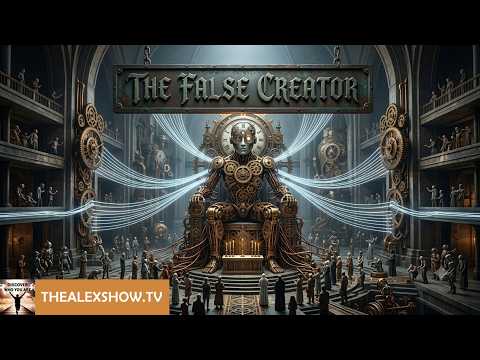
The Gnostic Framework: The False Creator and the Prison World

Gnosticism teaches that the material world was not created by the highest, transcendent source of existence. Instead, it was fashioned by a lesser being known as the Demiurge — sometimes called Yaldabaoth. This entity believes itself to be the true god but is ignorant of the greater reality beyond its constructed system.

According to Gnostic texts discovered in Nag Hammadi, humanity contains a divine spark trapped inside material bodies. We are spiritual beings confined within a limited world designed to keep us unaware of our true origin.

Now consider the parallels.

Christof as the Demiurge

In the film, Christof is the creator of Truman’s world. He controls the weather. He determines what Truman sees and hears. He orchestrates relationships, fear, trauma, and comfort. He literally speaks to Truman from the sky.

Christof insists that there is no greater truth outside his constructed environment. He believes he has given Truman a perfect life. He presents the prison as paradise.

This is precisely how the Demiurge is described in Gnostic cosmology: powerful within its domain, convinced of its own authority, and determined to keep souls from discovering the greater reality beyond the system.

Sea Haven as the Material Matrix

Sea Haven appears idyllic. Clean streets. Predictable routines. Friendly neighbors. But everything is controlled. Everything is artificial.

Truman’s fear of water is manufactured to prevent him from leaving. The boundaries of his world are carefully disguised. His entire perception is managed.

In the Gnostic model, the material world functions in a similar way. Systems of fear, attachment, desire, and survival are used to anchor consciousness within physical limitation. The illusion must appear normal. It must feel familiar. It must discourage exploration.

This is what makes the comparison so powerful. Truman’s dome is a literalized version of the spiritual dome described in ancient metaphysical traditions.

The Awakening: Gnosis Begins

Gnosis means direct knowing — inner realization of truth beyond dogma or belief. It is not intellectual understanding but experiential awakening.

In the film, Truman begins noticing glitches. A light falls from the sky. People repeat movements. Conversations feel scripted. Something is wrong.

This is the beginning of Gnosis.

Most people experience moments like this. A quiet intuition. A deep sense that something about reality is incomplete. A childhood feeling that life is staged, artificial, or hiding something just beyond perception.

Alex shares in the episode that since childhood, he felt this exact intuition — as if reality were a set waiting for someone to yell, “Cut.”

That instinct is universal. It is the divine spark recognizing limitation.

Sylvia as the Voice from Beyond

In Gnostic mythology, Sophia represents divine wisdom calling humanity back to remembrance.

In the film, Sylvia attempts to tell Truman the truth. She tries to break the script. She whispers that his world is fake. She urges him to look deeper.

She represents the external catalyst — the reminder that something exists beyond conditioning.

In our own lives, this role may be played by spiritual teachers, synchronicities, personal crises, or moments of profound introspection.

The Manufactured Storm: Archontic Resistance

When Truman finally attempts to sail away, Christof unleashes a violent storm. He tries to drown him rather than allow escape.

This is symbolic of archontic resistance — the forces that intensify when awakening accelerates. Fear increases. Doubt escalates. Obstacles multiply.

Yet Truman continues.

He reaches the edge of the dome. He touches the wall of his reality. He finds the door.

The Door: Liberation Beyond the System

Perhaps the most powerful moment in the film is when Truman chooses to step through the exit door.

Christof speaks to him like a god, trying one last time to convince him that there is nothing better beyond. He insists the world outside is harsher, more chaotic.

But Truman leaves anyway.

This is spiritual liberation. It is the soul choosing truth over comfort. Freedom over familiarity. Reality over illusion.

Life as the Truman Show?

Alex suggests that life may function similarly. Not necessarily as a literal television program, but as a structured system designed to keep consciousness focused on survival, scarcity, and repetition.

When human beings are locked in survival mode — worrying about money, health, or basic security — deeper existential questioning becomes secondary.

The first level of consciousness is survival. Many never move beyond it. And a system that keeps individuals in constant stress ensures limited awakening.

The Role of Suffering

Unlike the apparent paradise of Sea Haven, our world contains immense suffering. Financial instability. Physical pain. Emotional trauma. Collective anxiety.

If reality were truly paradise, why would so much of humanity experience chronic distress?

This question fuels spiritual investigation.

The Illusion of Ridicule

One of the most interesting observations from the episode is how truth is often presented through satire. When something is shown in exaggerated form, the mind dismisses it.

Aliens? Ridiculous. Simulation theory? Science fiction. Archons? Mythology.

Yet sometimes comedy hides revelation. By framing profound metaphysics inside a Hollywood narrative, the message bypasses resistance.

Reincarnation and the Exit Door

The film’s ending also parallels discussions of reincarnation. If the system is cyclical, souls may be redirected repeatedly — much like roadblocks forcing a U-turn.

But the suggestion remains: true intention cannot be stopped.

When consciousness genuinely chooses liberation, the door opens.

Discovering Your True Self

The most powerful takeaway from the episode is not fear of manipulation, but empowerment.

You are not your conditioning. You are not your limitations. You are not the script you were handed.

According to Alex, discovering your true self requires daily introspection. Ask the universe: Who am I? Where do I come from? What is my purpose?

Over time, perceptions shift. Fear dissolves. Competition fades. Ego softens.

True freedom begins internally long before any external door appears.

Awakening Without Judgment

Another key reminder: everyone awakens at their own pace. No one is right or wrong. Pride and superiority block growth as effectively as ignorance.

Compassion is essential. Understanding is necessary. Healing relationships matters.

Spiritual awakening is not escape from humanity — it is refinement of it.

Why This Story Matters Now

The Truman Show was released during the late 1990s — the same era that introduced films like The Matrix. Both stories questioned the nature of reality. Both depicted systems of control. Both centered on awakening.

Perhaps these narratives were preparing collective consciousness for deeper questioning in the decades ahead.

Today, more people than ever are exploring consciousness studies, simulation theory, near-death experiences, and metaphysical frameworks once dismissed as fringe.

The question is no longer absurd.

Final Thoughts

Is The Truman Show a Gnostic allegory?

The parallels are undeniable. A false creator. A controlled world. Manufactured fear. Awakening through inner doubt. A guiding voice from beyond. The final door to freedom.

Whether intentional or intuitive, the film mirrors ancient spiritual cosmology with stunning accuracy.

The real question becomes personal: Are we willing to examine our own dome? Are we ready to question inherited assumptions? Are we brave enough to walk toward the edge of our perceived limits?

As Alex concludes in the episode, you must want it. You must be willing to release attachments. And when you truly decide, nothing can stop you.

Watch the full discussion here:
Is The Truman Show a Gnostic Story?

Subscribe for more awakening content at:
TheAlexShow.TV

Discover your true self. Question your reality. And never be afraid to walk through the door.

Don’t React

Don’t React: Choosing Peace Over Programming

In this reflective and deeply practical episode of TheAlexShow.TV, Alex explores one of the most misunderstood yet transformative principles of inner freedom: don’t react. At first glance, this idea can sound passive, weak, or even irresponsible. But as Alex explains, not reacting has nothing to do with avoidance, suppression, or indifference. It is about reclaiming sovereignty over your inner state.

Reaction, as described in this conversation, is not strength. It is conditioning. It is the automatic response of the mind and body when they feel threatened, judged, or challenged. Learning not to react is not about giving up; it is about choosing peace consciously.

Why Reaction Feels So Automatic

From a very young age, most people are conditioned to believe that reaction is necessary. Someone raises their voice, you raise yours. Someone insults you, you defend yourself. Someone hurts you, you hurt them back. This pattern is so normalized that questioning it can feel unnatural.

Alex describes this world as a constant stream of stimuli designed to provoke reactions. News, social media, politics, family dynamics, and even relationships often operate by pulling emotional triggers. The moment you react, you disconnect from your true self and fall back into automatic behavior.

Reaction, in this sense, is not conscious choice. It is programming.

Reaction Comes From the Ego

Throughout the episode, Alex makes a clear distinction between reaction and intention. Reaction originates in the egoic mind, whose primary functions are survival, defense, and validation. When the ego feels attacked, it reacts without asking permission.

Fear, rage, envy, pride, and the need to be right all live in this reactive space. These emotions are not evil, but they are not your essence. They arise when identity is threatened.

Alex emphasizes that your reactions belong to you. No one else controls them. And because they are yours, you are not obligated to follow them.

Not Reacting Is Not Passivity

A common misunderstanding is that not reacting means allowing injustice, abuse, or mistreatment. Alex is very clear: not reacting does not mean staying in harmful situations.

You can leave a toxic job.
You can end a harmful relationship.
You can walk away from abusive environments.

What changes is how you do it.

Instead of acting from rage or vengeance, you act from clarity. Instead of exploding emotionally, you make deliberate decisions that restore harmony.

Choosing Peace Is an Act of Strength

Alex shares personal stories and observations that illustrate this point. People who choose peace are often misunderstood as weak, but the opposite is true. Remaining calm in a reactive world requires immense inner stability.

Peace is not something you find outside. It is your natural state when you stop feeding the noise.

As highlighted in the support material referenced in the episode, peace does not depend on external circumstances. Reaction hides peace. Silence reveals it.

Reaction Versus Intuition

One of the most important distinctions in this episode is between reaction and intuition. Reaction is loud, urgent, and emotional. Intuition is quiet, subtle, and grounded.

When you react, you are listening to the mind.
When you do not react, you create space to hear the heart.

Alex explains that intuition does not demand immediate action. It waits. It observes. It responds only when necessary.

Violence and Justification

In a particularly honest segment, Alex discusses conversations with people who believe violence is justified because of past trauma or repeated exposure. Rather than condemning them, he acknowledges their experience.

If violence feels like the right reaction for someone at a certain stage, that is their path. But Alex also points out an important pattern: violence always leaves an aftertaste. Even when justified, it creates an energetic hangover.

Peace, by contrast, leaves no residue.

The World Feeds on Reaction

Much of modern society thrives on emotional engagement. Outrage drives clicks. Fear drives compliance. Conflict drives attention.

Alex suggests that one of the most powerful ways to disengage from unhealthy systems is simply not to react. When you stop feeding them energy, they lose influence over you.

Not reacting is not ignoring reality; it is refusing to be consumed by it.

Relationships and Emotional Freedom

In relationships, reaction is often mistaken for passion. Arguments, jealousy, and emotional volatility are normalized as signs of love. Alex challenges this idea.

If a relationship constantly triggers reactions, it may not be aligned. Staying out of fear of loneliness often causes more suffering than being alone.

Choosing peace sometimes means choosing solitude. And that choice is not a failure.

Letting Go of Old Wounds

Alex also addresses long-held resentment, especially toward family members. Reliving past pain repeatedly is a form of reaction. It keeps the wound alive.

Letting go does not mean approving what happened. It means refusing to let it define your present.

Wishing others well — even from a distance — is not weakness. It is liberation.

Work, Money, and Harmony

Another practical aspect of not reacting is how it applies to work and daily life. Many people wake up already reacting to their jobs, their routines, and their responsibilities.

Alex suggests that harmony matters more than status or income. Choosing a path that aligns with peace may require difficult changes, but the reward is inner stability.

Money can be earned in many ways. Peace cannot be bought.

Not Reacting Is a Daily Practice

Alex is clear that not reacting is not easy. It is simple, but not easy. It requires awareness, patience, and consistent self-observation.

You will still feel emotions. You will still notice impulses. The difference is that you no longer obey them automatically.

Each moment of non-reaction strengthens your inner center.

The Natural State of Being

At its core, this episode reminds us that peace is not something to achieve. It is something to remember.

When you stop reacting, you return to your natural state. From that place, decisions are clearer, relationships are healthier, and life becomes lighter.

Final Reflection

Don’t react does not mean don’t care.

It means don’t surrender your inner peace to external chaos.

Not reacting is choosing love over fear, clarity over impulse, and harmony over conflict.

For more conversations on conscious living, inner peace, and self-discovery, visit TheAlexShow.TV and continue the journey with Alex.